Category Archives: Chinese herbs

Acupuncture and Chinese herbs for UTI’s

It is usually a simple 2+2 equation– urinary tract in infection equals a course or two, or three of antibiotics. It is such a common treatment that many doctors will not even check the urine for signs of bacteria overgrowth. Scanty and painful urination calls forth the penicillins, cephalosporins and fluoroquinolones. Sometimes these clear up the problem, in which case there is no point in reading further. However, in those for whom these heavy hitters of the western pharmaceutical arsenal can not seem to put an end to the problem, then Chinese medicine has options that don’t involve the complete decimation of the intestinal tract beneficial bacteria. What’s more, they can be tremendously effective. As I had an 80+ year old patient recently comment, “my urination has not been this smooth in 30 years.”

Antibiotics are amazing medicines when used properly, and for the scope in which they are most effective. However, overuse of these magic bullets over the past 50+ years has brought with it the co-evolution of the very bacteria we are trying to control. Our magic bullet has had the unfortunate side effect of encouraging the growth of more virulent strains of pathogens. And like any war of force, escalation brings with it more escalation. And the “collateral damage” likewise becomes increasingly severe.

Chinese herbs offer a different approach. And there is a reason why in the past 2000 years the doctors of Asia have not developed formulations that “kill” the invader. Unlike our western medical model of kill, cut and control, the medicine of Asia seeks to promote balance, harmony and communication between the various body systems. Systems in balance, those that are strong and resilient, inherently have the capability to control pathogenic influences. Chinese medicine’s strength lays not so much in fighting pathogens, but in promoting a systemic homeostasis that just does not give pathogens an environment to collect and breed.

Does this mean that Chinese herbs can only be used to treat long-term chronic and unresolved urinary tract infections? In a word, no. There are a number of formulas that both “attack the pathogen, while re-balancing the system.” These prescriptions are good for acute UTI’s. And for those recurrent issues that multiple courses of antibiotics just don’t seem to touch, the more harmonizing and strengthening formulas are more appropriate.

Acupuncture too is helpful, especially with the symptomatic issues of burning and urinary frequency. Together acupuncture and herbs can bring relief to the sufferer of chronic urinary tract infections that have been failed by multiple courses of antibiotics.

And of course, there are things you can do for yourself that help to regain bladder health and balance. Unsweetened cranberry juice is a commonly used home cure that many people find to be helpful. Also, anything you can do to reduce inflammation in your system will have a positive effect on the urinary system. So when dealing with a lingering UTI, cut out the sugar, eat well, balance work and play, and make sure you are getting enough of the good essential fatty acids– fish oil is a great source of these. In essence to have balance within, it is important to have balance in various aspects of life. As is often the case, an illness or symptom just might be a call to see how we are unfolding our life and if a change is being asked for.

Post to Twitter Post to Facebook

Acupuncture and Chinese Herbs for Fertility

If you have experienced issues with fertility, then you likely have put acupuncture and Chinese medicine on your list of treatments to consider. In my clinical experience I have seen these time honored Chinese methods to be of assistance to women who want to get pregnant. This article is written to help you know if you are a good candidate for using acupuncture or Chinese herbs.

Chinese medicine, unlike western medicine, is not looking to push, prod, or pull your body into an artificial hormonal flux that forces your ovaries into producing more eggs or speeding up the ripening process. With acupuncture and herbs we are looking to promote the overall harmony and function of all your organs, as the journey of pregnancy and parenthood involves more than the production and fertilization of a couple of cells. Furthermore, getting pregnant is one thing; being able to carry a health baby to term is another issue. Just as you want to plant seeds in moist, rich, nutrient filled soil, not a rocky, clay-packed field. So too, you want to be sure that you provide a welcoming and growth producing internal environment for a young growing life.

Who is a good candidate for treatment with acupuncture and herbs?

  • Women who have issues with their periods; such as debilitating menstrual pain, irregular periods, purple-black menstrual blood, or heavily clotted menstrual flows.
  • Women for whom western medicine has not found “anything wrong”
  • Women who have a family history of “problems with getting pregnant”

Issues with the menstrual cycle are often a good indication that there may be issues with fertility. Chinese medicine can do wonders for helping to regulate a woman’s menstruation, and this is often the first step promoting fertility.

Once the factors that lead to the period being irregular are removed, an increase in fertility is a common side effect. For those women who already have a problem free period, then other issues need to be explored.

If you are considering using Chinese medicine and acupuncture to enhance your fertility, please do not use it as a last resort measure. In my clinical experience, once a woman has had her endocrine system tapered with by hormonal therapy, it is more difficult and takes more time for the Chinese medicine methods to work. Best to use it as your first alternative, as your body’s natural flux and balance have yet to be severely altered and perhaps permanently changed (ask any woman who has experience about the effects of Clomid)

Finally, remember that getting pregnant is only one part of a long process of bringing a new life into the world. Being able to carry your pregnancy to term is another part of the process you need to consider. Properly nourishing yourself, making sure you’re as strong and vital as possible is an important aspect of promoting natural fertility.

Post to Twitter Post to Facebook

Treating Meniere’s disease with Chinese medicine

Acupuncture is well known for its ability to treat pain
, regulate a woman’s menstrual cycle, and instill a deep sense of quietude and well-being. What is less well known is that Chinese herbal medicine can be effective in the treatment of certain “incurable” problems. I’m not suggesting magic here, or that Chinese medicine has secret methods that can cure any health concern. What Chinese medicine, of which acupuncture is one aspect, does offer is a profoundly different understanding of human physiology. Viewed through the prism of this other perspective we can gain a different angle from which to both understand and treat illness.

Let’s take for example the treatment of Meniere’s disease. While the Western bio-medical world considers this to be an idiopathic problem related the fluid balance of the inner ear, and offers at best symptomatic treatment to the accompanying dizziness, vertigo and hearing loss. Chinese herbal medicine comes at it from a profoundly different view.

It is difficult to explain in a short blog post, and it does not help that the technical language of Chinese medicine uses a poetic word-salad of exotic terms such as Yin, Yang and Qi. Like looking at a Chinese watercolor, it is easy to mistake the simplicity of the lines for a lack of creative depth. So too the technical language of Chinese medicine easily blinds our Western reductionist mind to the depth of what appear to be simple concepts.

Suffice it to say, as quantum physics has been pointing out for decades now; that the structures we use to see, influences what we see. So too it is with Chinese medical thought– its paradigm of functional interaction between organ systems gives us a more systemic view than that obtained by simply looking at individual organs.

In the case of something like Meniere’s disease we are not so much concerned with the water that is causing mischief in the inner ear, as we are with accessing the water metabolism throughout the entire body. This means we must look at local areas of fluid stagnation, the various processes that drive water metabolism, and why the ears in particular are prone to this problem.

So, which Chinese herbal formulations treat Meniere’s disease? As with most conditions treated by acupuncture and Chinese herbs we need to first be clear about how a problem is constellated before we can choose the most effective way to treat it.

One size does not fit all, and it is rare that “symptom=prescription.”

The key to using Chinese medicine well is to look beyond the symptoms to the underlying physiological dysfunction; the root of the problem if you will. That is where treatment is to be applied. It is vitally important to remember that similar symptoms may have vastly different underlying root causes. This is why two people can go to visit an Chinese herbalist for the same “problem,” and come out with two very different herbal prescriptions.

More often than not, getting to the root of the problem will result in symptoms resolving on their own.


Post to Twitter Post to Facebook

Acupuncture and the treatment of cancer

Chinese medicine operates on a set of principles different from those upon which western science is founded. It is completely foreign both in philosophy and practice. As a result, many of us here in the West view it either as superstitious mumbo-jumbo, or an undiscovered miracle that just might hold the key to a long-term problem, or newly diagnosed danger. The truth, as is so often the case, lies somewhere in between.

It is easy to lure oneself into thinking that because something is “traditional” it is good. Likewise, in our ever-forward tumble into what is new and modern it is easy to discard simple and effective methods that are decidedly low-tech. It is not uncommon when seeking a solution to life threatening condition or long-term health problem to hope for a miracle cure; often people turn toward something like Chinese medicine and acupuncture hoping for that bottom of the ninth inning home run.

Sometimes it does resolve a problem that other therapies did not touch. Other times it proves to be one more method that tried and failed. Not all medicines work at all times for all people. Just like a scalpel is the right tool for reconstructing a knee or excising a tumor, but not so useful in the treatment of infections or regulating a metabolic disorder; different problems require different solutions.

So when the question arises of “Can Chinese medicine or acupuncture treat cancer?” we have to dig deeper into the question, and be more specific in our inquiry. Many times the meaning behind that question is “Does Chinese medicine have something up its sleeve that Western medicine does not?” or “Is there something that will allow me to recover without treading the painful road of surgery, chemo and radiation?” As with any complex and difficult life situation, there are no simple answers.

In my 15 years of studying and practicing Chinese medicine and acupuncture I would say that I have seen it be of benefit to those fighting cancer. What I have seen is that patients tend to do better with tolerating chemotherapy and radiation. They have less fatigue, tolerate higher levels of radiation, better blood work, improved appetite and less nausea. I’ve seen patients come in with headaches and walk out without them. I’ve seen patients who were told they had six months to live prove their doctors wrong by a factor of three or more.

Can Chinese medicine treat cancer?
Cancer is a complex disease and even Western medicine does not talk of a cure so much as of “survival times.” While there is research that suggests acupuncture boosts the immune system, that is just one aspect of dealing with cancer. What is clear is that acupuncture and Chinese medicine are useful in supporting the person who is struggling with cancer as it helps them to stay stronger through the aggressive Western medicine protocols, and helps to improve the quality of life as the side effects of chemo and radiation are minimized. What’s more, its ability to improve sleep, reduce anxiety, strengthen the digestion, lessen headaches and other discomfort, and create some quiet moments of calm in the storm are of benefit when marshaling the strength to withstand the cancer killing Western treatments.

Acupuncture and Chinese medicine do offer some solutions when it comes to supporting our body and spirit in the difficult journey of dealing with cancer. As this medicine has for centuries been used to support and strengthen the body’s normal homeostatic balance, it can also be an effective adjunctive therapy in the modern struggle against cancer.

Post to Twitter Post to Facebook

Chinese medicine treats that?

While well-known (and justifiably so) for the treatment of pain. Acupuncture and Chinese herbal medicine are useful for all kinds of problems for which you might seek out a western biomedicine doctor.

  • Urinary tract infections
  • Carpel tunnel syndrome
  • Depression
  • Acid reflux
  • Menstrual irregularities
  • Post-hepatic neuralgia
  • Anxiety
  • Problems with sleep
  • Confusion about direction in life

…all are issues that can be resolved with Chinese medicine.

I commonly hear the refrain,

“I didn’t know acupuncture treated that.”

Indeed it is not uncommon for those who come in seeking relief from one issue, find to their surprise and delight that acupuncture offers a drug free solution to something they had resigned themselves to a lifetime of suffering or ever-renewing drug prescription.

What else is well treated by Chinese medicine?
Those oddball or hard to describe symptoms that do not fit neatly into our usual western medicine thought and frame. Those peculiar symptoms that we avoid mentioning to a doctor for fear they will think we are a little crazy, or just plain weird. In practice those oddball symptoms can be the key to unlocking a particular health concern. Chinese doctors have been recording symptom pictures and presentations for thousands of years.
There is not much that sounds strange to us.

Thousands of years accumulated medical experience often gives the acupuncturist an insight or two into those conditions that defy discovery by western medicine’s scopes and scans. While we can effectively treat many conditions that are also treated by antibiotics and steroids, and do it without sides effects.
We also offer relief for those conditions that western medicine says do not exist, simply because they don’t move the needle on some machine or alter the chemistry of the blood. Feeling out of sorts is frequently an early warning that something is amiss, and like plucking weeds from a garden it is best to deal with them when they are small and only tenderly rooted.

Post to Twitter Post to Facebook

Treating allergies: symptomatic cure or fundamental rebalancing?

Walk by the “allergy” section of any drugstore, expose yourself to less than an hour of primetime TV, or flip casually through any magazine and you are bound to encounter a goldrush of advertisements that tout relief for the itchy, running, sneezy, foggy headed clog of the invisible annoyance of pollens, dust and whatnot. Everywhere is the litany of suffering and promise of relief, but there is a curious silence when it comes to dealing with the core issue from which these symptoms arise.

What about getting to the root of the problem?
There is a vast arsenal of decongestants and antihistamines that drains both your wallet and your nose. Ever wonder why it is that one person sneezes at ragweed and another finds it to be no bother whatsoever? It has to do with the ability of your body to cope with the effect of various influences. The Chinese see it as the interplay of 正  ”Zheng” (upright) and 邪 “Xie” (pathogenic) qi.

English please!
In short if your body has a certain kind of strength and internal flexibility then outside influences are like a bug on the windshield. (splat) If your “Zheng qi” is weak, well then it is as if you driving without a windshield. Every little thing, including the wind itself, is a cause of irritation.

What to do?
The solutions is to strengthen the body’s own resources so that there is more strength and flexibility in terms of dealing with outside influences. Ever meet someone who was wound just a little too tight? A careless glance or word would set them off on an emotional rollercoaster. Or there are other people who are constantly taken advantage of, as their vocabulary lacks the word “no.” Some of us have a physical constitution that is a bit like these personalities. The body itself is either overly sensitive or too weak to defend its own territory. Either extreme brings its own kind of problems.

The Chinese long ago figured out that we are all uniquely different, and it is not effective to attempt to treat everyone the same. One person’s sneezing and sinus headache has a different root cause than someone else’s. So when you come to Yong Kang we do not “treat your allergies” we treat you by strengthening and balancing your unique system so that it is not so sensitive to outside influences.
In short, we install a windshield. And change your oil and rotate the tires while we are at it.

Ready to get to the root cause of those allergies? Roll on in!

Post to Twitter Post to Facebook

Are Chinese herbs dangerous?

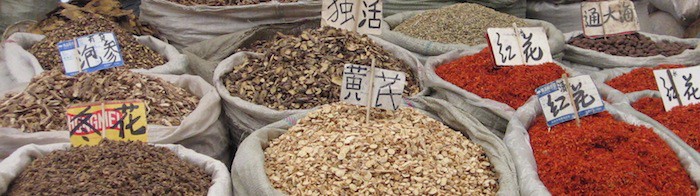
Chinese herbs at yong kang clinic
I love watching those Olympic athletes bump through a mogul field, float a corkscrewed flip, land like cat and continue to scream like a banshee down the slope. The way those skaters pull off a triple backward spin and land on a thin edge of steel is truly miraculous. Watching world-class athletes is indeed amazing.

Equally amazing for me were the commercials. Especially the ones for prescription medication that combine the image of a smile-happy patient bouncing through life against the background rapid-fire litany of side effects and cautions.

This product may cause:
Insomnia
Headaches
Diarrhea
Hallucinations
Brest enlargement in men
Anxiety
Suicidal thoughts
Back pain
Blurred vision
Nausea
Constipation
Decrease in sexual ability
Birth defects
Liver damage
Joint aches
Problems if handled by pregnant women
Nose bleeds
Hair loss
Skin rashes
Dizziness
Coughing
Urinary tract infections
Heartburn
Panic attacks

“Ask you doctor if this drug is right for you.

Perhaps it is best that we should be ask ourselves if these drugs are right for US.

Are Chinese herbs dangerous? Depends on what you are comparing them to. There were some cases about 12 years ago of a number of patients suffering kidney failure after taking a diet pill that was a compound of various herbs and pharmaceuticals. Indeed there was a Chinese herb involved in the mix that was a known nephrotoxin. It was also an herb that any trained Chinese herbalist would avoid or use with extreme caution as we are aware of its potential dangers.

Are Chinese herbs dangerous? They can have powerful effects, and generally speaking when prescribed by a qualified and skilled practitioner they are quite safe, and effective.
That being said, as with anything posted on the Internet as a miracle cure-all or a medication guaranteed to treat XYZ condition, one should exercise caution in its purchase and use.

At Yong Kang Clinic we use only products that have been tested for contaminates, heavy metals, and are proven to be free adulterates. There are products from mainland China that you should be wary of; you will not find those at Yong Kang.

Have a question about Chinese herbs? Email us! We would be happy to help you enjoy the benefit of 2000+ years of Chinese medical science.

Post to Twitter Post to Facebook